
Chariton County VINELink Coverage
Missouri brands VINE as the Missouri Victim Automated Notification System, or MOVANS. The service can present custody and case events from participating sources and can register users for notices. It does not own the jail or corrections record. The agency that sent an event remains the source for documentary proof.
Chariton County adds an important custody split. Since local inmate housing moved out of Keytesville, Randolph County Jail is the expected jail source for a Chariton detainee. The statewide MOVANS service exists, but research did not prove that every Chariton booking appears. Confirm the source shown on the matched record. A person who entered MODOC may have state data, while a county-only detainee may have no MODOC record.
Federal BOP and ICE custody do not become VINELink records merely because a case began in Chariton. Use the federal agency’s own locator. A release to another agency is a transfer, not freedom in the community.
Search a Chariton VINELink Record
Open the Missouri VINELink interface, not an unverified search result. A known offender or booking identifier is the strongest key. If only a name is available, use all source, facility, and biographical details the interface offers. Similar names can lead to a serious mismatch.
- Select Missouri and the relevant custody or case category.
- Enter the person’s full name or known offender identifier.
- Narrow the results with date of birth, source agency, facility, or other available details.
- Open only the record that matches those facts.
- Record the exact agency, status words, and status date, then confirm an unclear event with that agency.
If no record appears, do not report the person as released. The agency may not participate, a transmission may lag, the spelling may differ, or the record may no longer be searchable. For a Chariton detainee, contact Randolph at 844-277-6555 about the custody transaction and Chariton at 660-288-3277 about originating records.
The official Missouri VINELink screen shows the state-specific search and registration entry point.
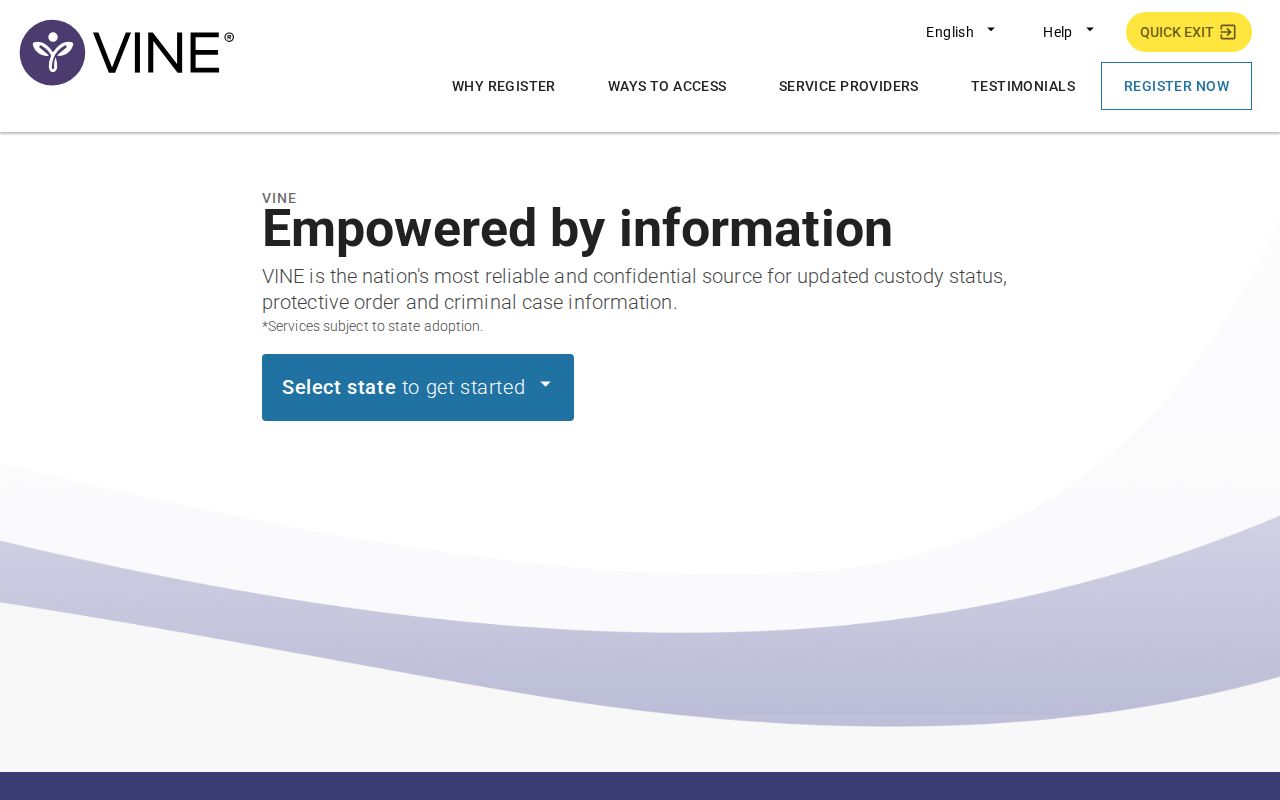
Use the live screen because categories, controls, and labels can change after a capture.
Read Chariton VINELink Release Fields
The result must be read as a set. A status word without its agency and date can be misleading. MOVANS may carry release and other custody or case changes, so the event label determines what happened.
| Field | What to verify |
|---|---|
| Name and identifier | That the record belongs to the intended person, not a namesake. |
| Source agency | Which jail, corrections agency, or court supplied the event. |
| Custody status | The exact wording, such as in custody, released, transferred, or unavailable. |
| Facility or location | Whether the person is at a jail, prison, or another reported assignment. |
| Status date | When the source recorded the event, which may differ from notification delivery time. |
“Released” supports a release event. “Transferred,” “out to court,” “escaped,” or “deceased” must not be rewritten as community release. A negative result is not a historical release certificate. For an exact timestamp, release type, or receiving agency, request the underlying Randolph or MODOC record.
Still-in-custody and released searches also diverge. Randolph’s live JailTracker can show present county custody, but roster absence alone proves nothing. MODOC’s active search can show prison or community supervision, yet it omits fully discharged people. The Chariton released-inmate lookup path connects those records without treating one portal as universal.
Register Chariton Release Notifications
Registration works best while the correct person is still visible. Open the matched record before choosing a notice method. The MOVANS public-user reference guide documents the name or ID search, contact method, and PIN workflow. Follow the live interface rather than guessing at button names.
- Open the confirmed person record and choose its notification-registration option.
- Select an offered method, such as telephone or email.
- Enter the destination and confirm it as directed.
- Create or enter the requested PIN or confirmation information, and keep it private.
- Save the registration confirmation and follow telephone prompts to acknowledge later calls.
Unacknowledged phone calls may repeat under system settings. A notice can report more than release. Read the whole message, including the source and event type. If it reports transfer, follow the receiving agency. If it reports release, ask the record custodian for proof when the precise time or release type matters.
Note: Registration does not change a sentence, release decision, custody status, or a participating agency’s reporting schedule.
Why Chariton Uses MOVANS Alerts
MOVANS is especially useful here because neither Chariton’s sheriff page nor Randolph’s official custody route exposed a separate recent-release feed during research. The statewide notification layer can warn of a change for a matched person without forcing a user to infer release from a disappearing roster name.
That local value has a limit. Statewide branding does not guarantee coverage for every booking. Verify that the chosen person and source appear before relying on an alert. Keep the confirmation details. When no record appears, use the source agency rather than repeatedly treating the blank search as a result.
The Chariton victim-services directory and Missouri DPS materials explain the public notification route. They do not replace Randolph’s booking or release transaction, Chariton’s case record, or MODOC’s state sentence record.
Route Chariton Alerts by Source
The agency name on a MOVANS event tells the user where to confirm it. A Randolph County Jail event concerns the actual housing jail and its booking, movement, or release transaction. Chariton County may still hold the arrest report, transport material, and the criminal case. A MODOC event concerns state prison or state community supervision. These offices do not certify one another’s records.
Start with the event source, then ask a narrow question. For a reported release, request the recorded release date and time, release type, booking or offender number, and any receiving agency. For a transfer, ask where custody went next. For a court event, check the Chariton Case.net docket and the clerk’s official copy, but remember that a judicial order is not the jail-door timestamp.
Source routing also prevents a common mistake. A person can leave Randolph and enter MODOC, federal, or immigration custody. The first jail record may correctly say “released to” an agency even though the person did not enter the community. Follow the receiving system until the custody path is clear.
Confirm a Chariton VINELink Release
VINELink data depends on participating agencies and their transmissions. A new booking, transfer, release, or correction may take time to appear. A status date may describe when the source posted the event, while a call or email arrives later. Use the alert to begin confirmation.
Important: VINELink does not replace the BOP or ICE locator, and a missing record does not prove release. Confirm with the agency named in the event.
For a county event, Randolph is the likely custodian of the physical custody and release transaction. Chariton may hold the arrest and court trail. For a state event, compare the MODOC active offender search, remembering that a community supervision result is not prison custody and a fully discharged person may be absent. Federal sentenced-prisoner status belongs in the BOP locator; current immigration detention belongs in ICE’s system.
A court order can explain why release was authorized. It does not prove when jail processing ended or whether another hold caused a transfer. Documentary confirmation should include the person’s identifiers, source agency, status wording, event date, and the release or transfer field from the originating record.
For a written request, identify the person, approximate booking dates, and the exact existing fields sought. Ask Randolph for the booking or release sheet that shows the timestamp, release type, and receiving agency. Ask Chariton separately for its arrest or transport record when those details matter. If the event belongs to MODOC, use the department’s record channel. This narrow approach avoids asking one office to create a conclusion from records held by another. It also preserves the difference between online availability and an official public record. A field may be absent from VINELink yet available from the custodian, while another field may be closed or redacted under law.
Registration is most useful before the expected event. Save the confirmation and keep the PIN private. Telephone users should follow the acknowledgment prompts because unacknowledged calls may repeat under system settings. If a phone number or email changes, update the registration through the official process instead of assuming that an old alert will reach the new destination.
Identity should be checked again when the notice arrives. Compare the source agency, person identifier, facility, event wording, and event date. A court notice can reflect a hearing or docket change without a jail exit. A custody notice can reflect a transfer rather than community release. The complete message, not the fact that an alert was sent, determines which record to request next.
Keep the original notice until the responsible agency confirms the Chariton County release or transfer event.